Introduction
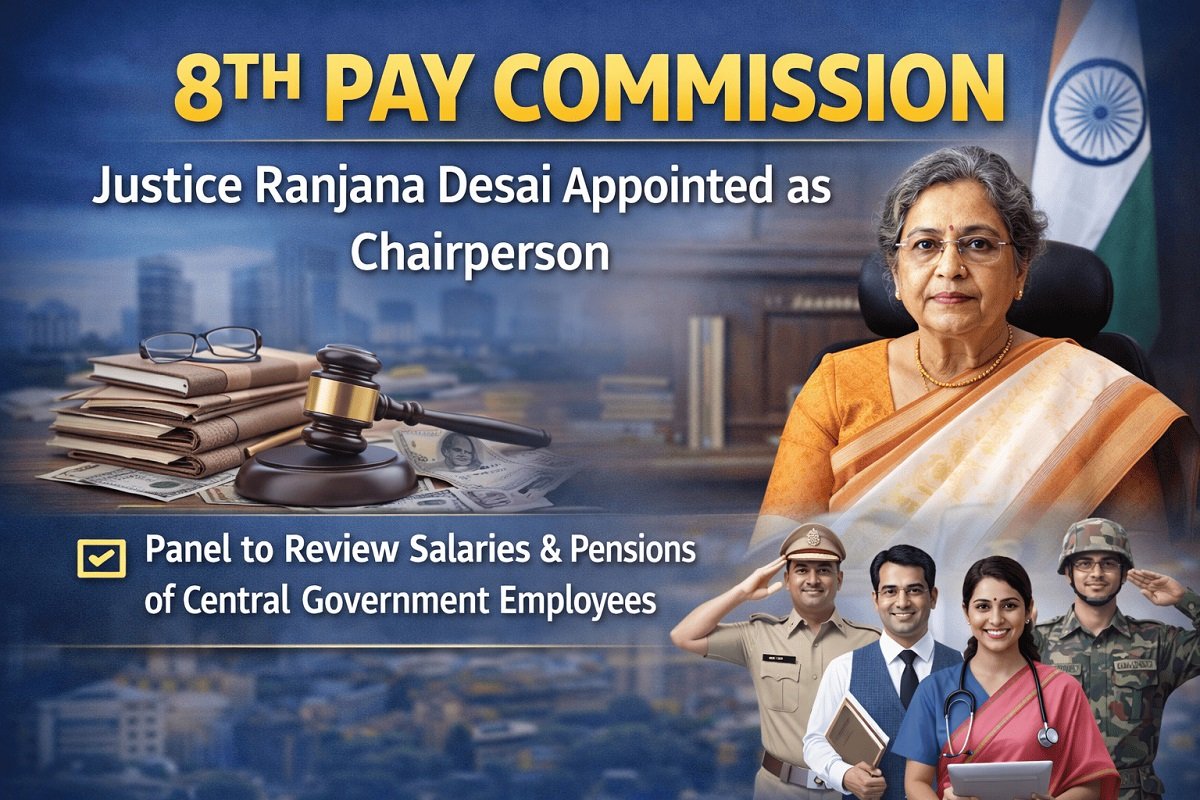
The 8th Pay Commission is one of the most anticipated reforms for Central Government employees and pensioners in India. After the implementation of the 7th Pay Commission in January 2016, government employees are now eagerly waiting for the next pay revision that will revise salaries, allowances, and pensions.
Pay Commissions are constituted by the Government of India to review and recommend changes in the pay structure of central government employees, defense personnel, and pensioners. The 8th Pay Commission is expected to significantly improve income levels and adjust salaries in line with inflation and economic growth.
Summary
| Aspect | Status |
|---|---|
| Chairperson | Justice Ranjana Prakash Desai |
| Committee Members | IIM Prof. Pulak Ghosh (Part-Time), Pankaj Jain (Member-Secretary) |
| Mandate Deadline | ~18 months from formation |
| Report Implementation Date (Expected) | From Jan 1, 2026 subject to approval |
| Budget Allocation | Not separately budgeted; fiscal impact comes post-recommendations |
What is the 8th Pay Commission?
The 8th Pay Commission is a proposed government panel that will recommend a new pay structure for central government employees. Its primary objective is to revise basic pay, allowances, pensions, and benefits to reflect the rising cost of living and inflation.
Once constituted, the commission studies economic conditions, employee demands, inflation data, and fiscal capacity before submitting its recommendations to the government.
Expected Implementation Date of 8th Pay Commission
Historically, Pay Commissions are implemented every 10 years:
- 6th Pay Commission: 2006
- 7th Pay Commission: 2016
Based on this pattern, the 8th Pay Commission is expected around 2026. However, the government has not yet officially announced the formation or implementation date of the 8th Pay Commission.
Expected Salary Hike under 8th Pay Commission
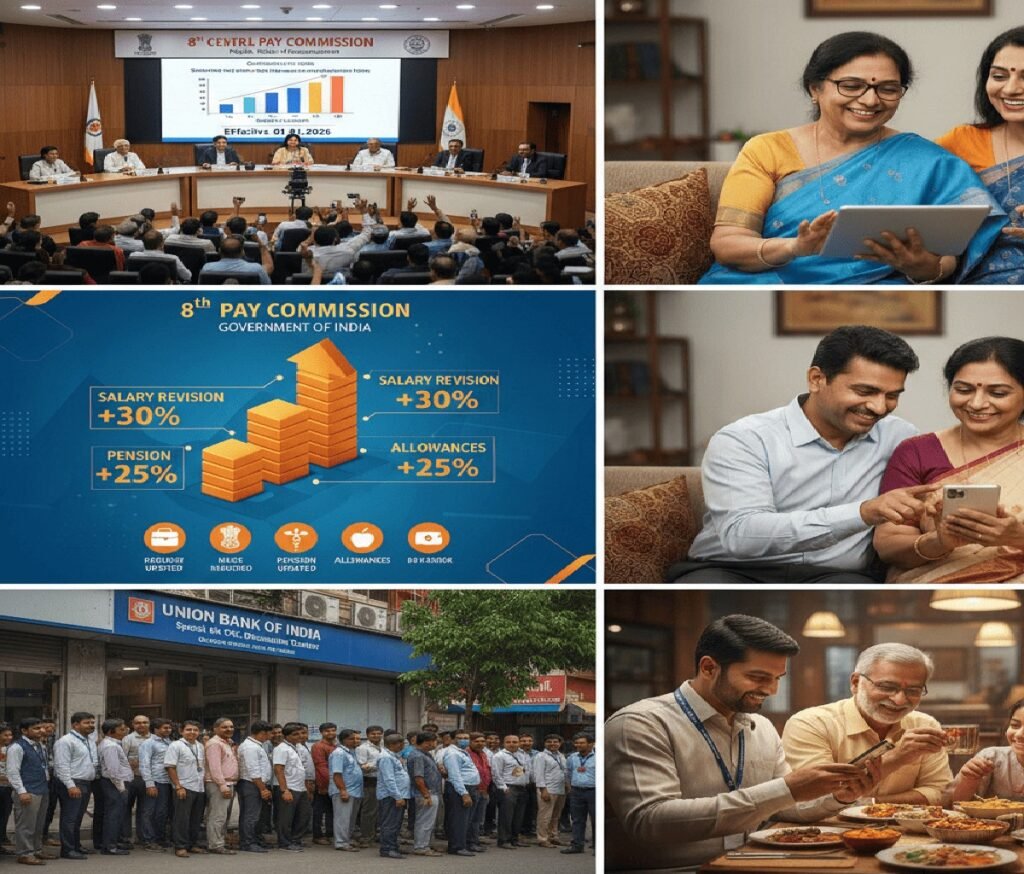
One of the biggest expectations from the 8th Pay Commission is a substantial salary hike. Experts believe that the salary increase could range between 25% to 35%, depending on the fitment factor and revised pay matrix.
The actual hike will depend on:
- Inflation rate
- Economic conditions
- Government revenue
- Recommendations of the Pay Commission
8th Pay Commission Fitment Factor (Expected)
The fitment factor is used to calculate the revised basic pay. Under the 7th Pay Commission, the fitment factor was 2.57.
For the 8th Pay Commission, experts expect the fitment factor to be between:
- 2.86 to 3.68 (expected range)
A higher fitment factor would result in a higher basic salary.
Expected Minimum Salary under 8th Pay Commission
Under the 7th Pay Commission, the minimum basic salary was fixed at ₹18,000 per month.
Under the 8th Pay Commission, the minimum salary is expected to increase to:
- ₹26,000 to ₹30,000 per month (estimated)
This will provide major relief to lower-level employees.
Impact of 8th Pay Commission on Allowances
The 8th Pay Commission is expected to revise various allowances, including:
- Dearness Allowance (DA)
- House Rent Allowance (HRA)
- Travel Allowance (TA)
- Medical Allowance
- Special Duty Allowance
Allowances may be merged or restructured depending on inflation trends.
Impact on Pensioners
Pensioners are also expected to benefit significantly from the 8th Pay Commission.
Key expected changes:
- Increase in minimum pension
- Revised pension calculation formula
- Better family pension benefits
- Fitment-based pension revision
This will help retired employees cope with rising living costs.
Who Will Benefit from the 8th Pay Commission?
- Central Government employees
- Defense personnel
- Retired government employees (pensioners)
- Family pensioners
- Certain autonomous bodies following central pay scales
State governments may also adopt the revised pay structure later.
Challenges in Implementing the 8th Pay Commission
While employees expect higher salaries, the government faces challenges such as:
- Increased fiscal burden
- Budget constraints
- Impact on government expenditure
- Balancing economic growth with welfare
Expected Implementation Date of 8th Pay Commission
Historically, Pay Commissions are implemented every 10 years:
- 6th Pay Commission: 2006
- 7th Pay Commission: 2016
Based on this pattern, the 8th Pay Commission is expected around 2026. However, the government has not yet officially announced the formation or implementation date of the 8th Pay Commission.
Expected Salary Hike under 8th Pay Commission
One of the biggest expectations from the 8th Pay Commission is a substantial salary hike. Experts believe that the salary increase could range between 25% to 35%, depending on the fitment factor and revised pay matrix.
The actual hike will depend on:
- Inflation rate
- Economic conditions
- Government revenue
- Recommendations of the Pay Commission
8th Pay Commission Fitment Factor (Expected)
The fitment factor is used to calculate the revised basic pay. Under the 7th Pay Commission, the fitment factor was 2.57.
For the 8th Pay Commission, experts expect the fitment factor to be between:
- 2.86 to 3.68 (expected range)
A higher fitment factor would result in a higher basic salary.
Expected Minimum Salary under 8th Pay Commission
Under the 7th Pay Commission, the minimum basic salary was fixed at ₹18,000 per month.
Under the 8th Pay Commission, the minimum salary is expected to increase to:
- ₹26,000 to ₹30,000 per month (estimated)
This will provide major relief to lower-level employees.
Salary Comparison Table: 7th Pay Commission vs 8th Pay Commission (Expected)
| Component | 7th Pay Commission | 8th Pay Commission (Expected) |
|---|---|---|
| Minimum Basic Salary | ₹18,000 | ₹26,000 – ₹30,000 |
| Fitment Factor | 2.57 | 2.86 – 3.68 |
| Salary Hike | — | 25% – 35% |
| Pay Matrix Levels | Level 1 to 18 | Revised / Expanded Levels |
| Dearness Allowance (DA) | Separate (revised twice yearly) | Possible merger or reset |
| House Rent Allowance (HRA) | 8%, 16%, 24% | Likely revised rates |
| Pension Calculation | Based on last pay drawn | Revised fitment-based pension |
| Minimum Pension | ₹9,000 | ₹13,000 – ₹15,000 (Expected) |
| Implementation Year | 2016 | 2026 (Expected) |
Note: Figures for the 8th Pay Commission are indicative and subject to official government notification.
Impact of 8th Pay Commission on Allowances
The 8th Pay Commission is expected to revise various allowances, including:
- Dearness Allowance (DA)
- House Rent Allowance (HRA)
- Travel Allowance (TA)
- Medical Allowance
- Special Duty Allowance
Allowances may be merged or restructured depending on inflation trends.
Impact on Pensioners
Pensioners are also expected to benefit significantly from the 8th Pay Commission.

Key expected changes:
- Increase in minimum pension
- Revised pension calculation formula
- Better family pension benefits
- Fitment-based pension revision
This will help retired employees cope with rising living costs.
Who Will Benefit from the 8th Pay Commission?
- Central Government employees
- Defense personnel
- Retired government employees (pensioners)
- Family pensioners
- Certain autonomous bodies following central pay scales
State governments may also adopt the revised pay structure later.
Challenges in Implementing the 8th Pay Commission
While employees expect higher salaries, the government faces challenges such as:
- Increased fiscal burden
- Budget constraints
- Impact on government expenditure
- Balancing economic growth with welfare
These factors may influence final recommendations.
Frequently Asked Questions (FAQs)
Is the 8th Pay Commission officially announced?
No, as of now, the government has not officially announced the 8th Pay Commission.
When will the 8th Pay Commission be implemented?
It is expected around 2026, based on past pay commission cycles.
What salary hike is expected under the 8th Pay Commission?
A salary hike of 25% to 35% is expected, subject to government approval.
Will pensioners benefit from the 8th Pay Commission?
Yes, pensioners are expected to receive revised pensions and benefits.
Conclusion
The 8th Pay Commission holds great importance for millions of central government employees and pensioners. Although the government has not yet made any official announcement, expectations are high regarding salary hikes, fitment factor improvements, and pension revisions. Once implemented, the 8th Pay Commission is expected to improve the financial well-being of government employees and boost overall economic demand.
Employees are advised to stay updated with official government notifications and announcements regarding the formation and implementation of the 8th Pay Commission.
You May Like :- Property Tax in India: Meaning, Calculation, Online Payment & Benefits